
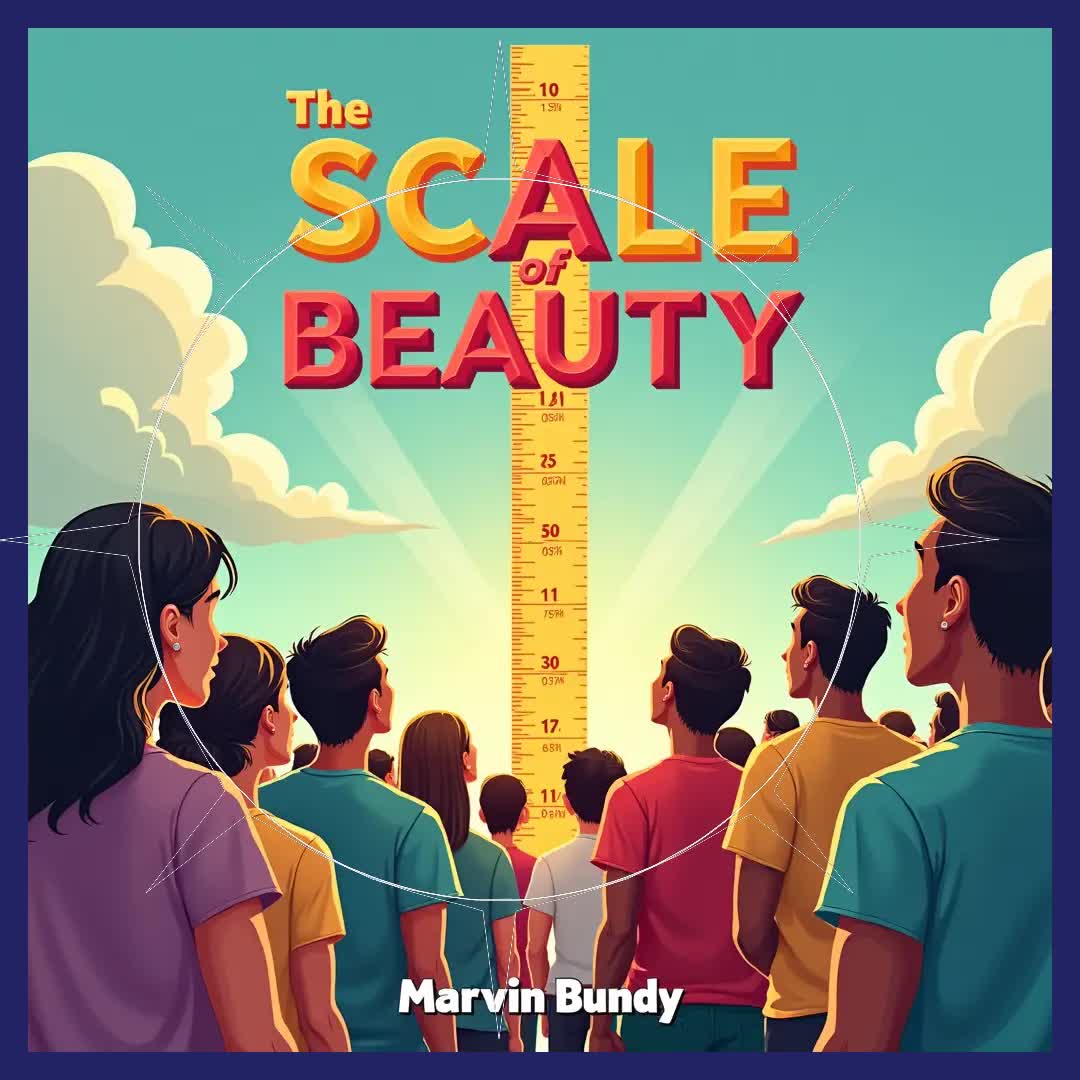
The Scale of Beauty Part 1
Transkription
What if I told you that every time you rate your beauty on a scale, you're participating in a psychological experiment that started over 50 years ago?
Studies show that 89% of women have rated their appearance numerically at least once.
But what researchers discovered about the long term effects will make you question everything you thought you knew about self perception.
The results are so powerful, some countries are actually considering banning beauty rating systems altogether.
Let me share with you the actual events that took place.
I was sitting in my office one day when my secretary entered, looking quite cheerful.
She asked me, are you familiar with that woman, Christy Brinkley?
I replied, yes, I am.
To which she responded, she's a perfect 10.
Curious, I asked her, and where do you place yourself?
She seemed momentarily bewildered, searching her mind for an answer.
Eventually, she said she believed she was around a six on that scale.
I then probed further, asking, what would a one or two represent on this scale?
She was unable to answer, which struck me as revealing.
She clearly had no understanding of the psychological and somewhat degrading tool she was using to assess her attractiveness.
Here's a real life incident I experienced that illustrates this point.
While grilling at a birthday celebration, two women approached me.
They were my cousins.
I happened to overhear their conversation about beauty.
At one moment, one of them said, seven and the other responded, I'm a seven too.
Curious, I turned to face them and asked, why are you judging yourselves based on something that only exists in your imagination?
They both fell silent, clearly taken aback by my words.
Then one cousin said, hold on to that thought.
I want to grab my things so I can listen more closely to what you have to say.
I proceeded to explain that rating themselves on an imaginary scale is purely a societal construct, an idea imposed by society that is psychologically harmful at best and damaging at worst.
I see true beauty as something internal, arising from self acceptance rather than external opinion or standards.
This motivated me to write about the harmful, intentional game society plays which divides people into the beautiful and the ugly.
The concept of measuring beauty on a scale of 1 to 10 has been a long standing practice, deeply ingrained in societal norms and cultural expectations.
However, this seemingly innocuous practice can have profound and far reaching consequences on mental health and well being.
The condensed evidence provided sheds light on the complexities that surround this issue, highlighting the intricate interplay between psychological factors, cultural influences, social media pressures and emerging technological advancements.
One of the most significant impacts of beauty measurement scales lies in their potential to exacerbate body image issues and diminish self esteem, particularly among vulnerable populations such as teenagers.
The development of scales like the charismaphobia scale underscores the importance of assessing the mental conditions underlying common dermatological problems related to beauty and physical attraction.
This recognition highlights the intrinsic link between physical appearance and psychological well being, a connection that cannot be overlooked.
To mitigate the potential mental damage associated with subjective beauty standards, researchers have proposed the concept of a facial or body aesthetic index or bai.
These objective assessment parameters aim to quantify the effectiveness of aesthetic treatments, potentially reducing the psychological burden imposed by societal beauty norms.
Furthermore, the integration of emerging technologies such as deep learning and AI based methods could revolutionize the field of aesthetic medicine by providing more objective and data driven approaches to beauty perception.
However, it is crucial to recognize that beauty perception is not a universal construct.
It is deeply rooted in cultural contexts and and shaped by a myriad of societal factors.
Cultural backgrounds and generational status significantly influence beauty perceptions, with notable differences emerging between first and second generation individuals as well as between diverse ethnic groups.
This highlights the importance of understanding and appreciating the diversity of cultural identities and beauty standards.
Rather than imposing a singular homogenized ideal.
Lets not forget the influence of cultural differences on beauty perception is further complicated by the pervasive impact of globalization, technology and social media.
These forces have the potential to create conflicting beauty standards and ideals, exacerbating the psychological strain experienced by individuals striving to conform to unrealistic expectations.
Consequently, the negative psychological and physical consequences of these idealized beauty standards on female health and well being have become a significant concern, particularly in the context of societal norms, cultural barriers and religious aspects of beauty.
The rise of social media has further amplified the impact of beauty standards on self esteem and body image.
Alarmingly, over 60% of individuals who engage with social media report heightened concerns about their appearance, with more time spent on social media intensifying body image disorders among both young women and men.
This influence is exacerbated by factors such as peer interactions, media representation and public policies, which points to the importance of comprehensive policies and support systems that promote diverse body representations, media literacy and healthy body image perspectives.
The objectification theory and the concept of self objectification provide helpful information regarding the psychological mechanisms underlying the mental damage associated with beauty standards.
According to objectification theory, women are socialized to view themselves as objects for others pleasure, leading to self objectification, which involves internalizing this objectified view of oneself.
This internalization can result in a range of negative outcomes including body image disturbances, body shame, guilt, low self esteem and other mental health problems.
Contextual factors such as social networks, sexualized content and gender role socialization play a crucial role in shaping self objectification and its consequences.
Adolescent girls who are exposed to objectifying media and societal beauty standards may be more likely to internalize these messages and engage in self objectification, highlighting the need for targeted interventions and educational initiatives to mitigate these harmful effects.
In summary, the mental damage associated with the measurement of beauty using a scale of 1 to 10 is a complex and multifaceted issue that transcends individual experiences and extends into broader societal and cultural contexts.
While the pursuit of objective assessment parameters and the integration of emerging technologies hold promise in reducing the psychological burden of beauty standards, it is imperative to recognize and address the underlying cultural, social, and psychological factors that shape beauty perceptions.
Ultimately, promoting diverse and inclusive beauty standards, fostering media literacy, and prioritizing mental health and well being should be at the forefront of efforts to mitigate the mental damage associated with beauty measurement scales.
By acknowledging the intricate interplay between cultural, social, and psychological factors, we can work toward creating a more inclusive and empowering environment that celebrates the inherent beauty and worth of every individual, regardless of their appearance.
Studies show that 89% of women have rated their appearance numerically at least once.
But what researchers discovered about the long term effects will make you question everything you thought you knew about self perception.
The results are so powerful, some countries are actually considering banning beauty rating systems altogether.
Let me share with you the actual events that took place.
I was sitting in my office one day when my secretary entered, looking quite cheerful.
She asked me, are you familiar with that woman, Christy Brinkley?
I replied, yes, I am.
To which she responded, she's a perfect 10.
Curious, I asked her, and where do you place yourself?
She seemed momentarily bewildered, searching her mind for an answer.
Eventually, she said she believed she was around a six on that scale.
I then probed further, asking, what would a one or two represent on this scale?
She was unable to answer, which struck me as revealing.
She clearly had no understanding of the psychological and somewhat degrading tool she was using to assess her attractiveness.
Here's a real life incident I experienced that illustrates this point.
While grilling at a birthday celebration, two women approached me.
They were my cousins.
I happened to overhear their conversation about beauty.
At one moment, one of them said, seven and the other responded, I'm a seven too.
Curious, I turned to face them and asked, why are you judging yourselves based on something that only exists in your imagination?
They both fell silent, clearly taken aback by my words.
Then one cousin said, hold on to that thought.
I want to grab my things so I can listen more closely to what you have to say.
I proceeded to explain that rating themselves on an imaginary scale is purely a societal construct, an idea imposed by society that is psychologically harmful at best and damaging at worst.
I see true beauty as something internal, arising from self acceptance rather than external opinion or standards.
This motivated me to write about the harmful, intentional game society plays which divides people into the beautiful and the ugly.
The concept of measuring beauty on a scale of 1 to 10 has been a long standing practice, deeply ingrained in societal norms and cultural expectations.
However, this seemingly innocuous practice can have profound and far reaching consequences on mental health and well being.
The condensed evidence provided sheds light on the complexities that surround this issue, highlighting the intricate interplay between psychological factors, cultural influences, social media pressures and emerging technological advancements.
One of the most significant impacts of beauty measurement scales lies in their potential to exacerbate body image issues and diminish self esteem, particularly among vulnerable populations such as teenagers.
The development of scales like the charismaphobia scale underscores the importance of assessing the mental conditions underlying common dermatological problems related to beauty and physical attraction.
This recognition highlights the intrinsic link between physical appearance and psychological well being, a connection that cannot be overlooked.
To mitigate the potential mental damage associated with subjective beauty standards, researchers have proposed the concept of a facial or body aesthetic index or bai.
These objective assessment parameters aim to quantify the effectiveness of aesthetic treatments, potentially reducing the psychological burden imposed by societal beauty norms.
Furthermore, the integration of emerging technologies such as deep learning and AI based methods could revolutionize the field of aesthetic medicine by providing more objective and data driven approaches to beauty perception.
However, it is crucial to recognize that beauty perception is not a universal construct.
It is deeply rooted in cultural contexts and and shaped by a myriad of societal factors.
Cultural backgrounds and generational status significantly influence beauty perceptions, with notable differences emerging between first and second generation individuals as well as between diverse ethnic groups.
This highlights the importance of understanding and appreciating the diversity of cultural identities and beauty standards.
Rather than imposing a singular homogenized ideal.
Lets not forget the influence of cultural differences on beauty perception is further complicated by the pervasive impact of globalization, technology and social media.
These forces have the potential to create conflicting beauty standards and ideals, exacerbating the psychological strain experienced by individuals striving to conform to unrealistic expectations.
Consequently, the negative psychological and physical consequences of these idealized beauty standards on female health and well being have become a significant concern, particularly in the context of societal norms, cultural barriers and religious aspects of beauty.
The rise of social media has further amplified the impact of beauty standards on self esteem and body image.
Alarmingly, over 60% of individuals who engage with social media report heightened concerns about their appearance, with more time spent on social media intensifying body image disorders among both young women and men.
This influence is exacerbated by factors such as peer interactions, media representation and public policies, which points to the importance of comprehensive policies and support systems that promote diverse body representations, media literacy and healthy body image perspectives.
The objectification theory and the concept of self objectification provide helpful information regarding the psychological mechanisms underlying the mental damage associated with beauty standards.
According to objectification theory, women are socialized to view themselves as objects for others pleasure, leading to self objectification, which involves internalizing this objectified view of oneself.
This internalization can result in a range of negative outcomes including body image disturbances, body shame, guilt, low self esteem and other mental health problems.
Contextual factors such as social networks, sexualized content and gender role socialization play a crucial role in shaping self objectification and its consequences.
Adolescent girls who are exposed to objectifying media and societal beauty standards may be more likely to internalize these messages and engage in self objectification, highlighting the need for targeted interventions and educational initiatives to mitigate these harmful effects.
In summary, the mental damage associated with the measurement of beauty using a scale of 1 to 10 is a complex and multifaceted issue that transcends individual experiences and extends into broader societal and cultural contexts.
While the pursuit of objective assessment parameters and the integration of emerging technologies hold promise in reducing the psychological burden of beauty standards, it is imperative to recognize and address the underlying cultural, social, and psychological factors that shape beauty perceptions.
Ultimately, promoting diverse and inclusive beauty standards, fostering media literacy, and prioritizing mental health and well being should be at the forefront of efforts to mitigate the mental damage associated with beauty measurement scales.
By acknowledging the intricate interplay between cultural, social, and psychological factors, we can work toward creating a more inclusive and empowering environment that celebrates the inherent beauty and worth of every individual, regardless of their appearance.
Beginnen Sie kostenlos zu erstellen
Verwandeln Sie Audio in Videos, Transkriptionen und Social-Media-Inhalte in Minuten
Probieren Sie es heute aus